A maze for rats…
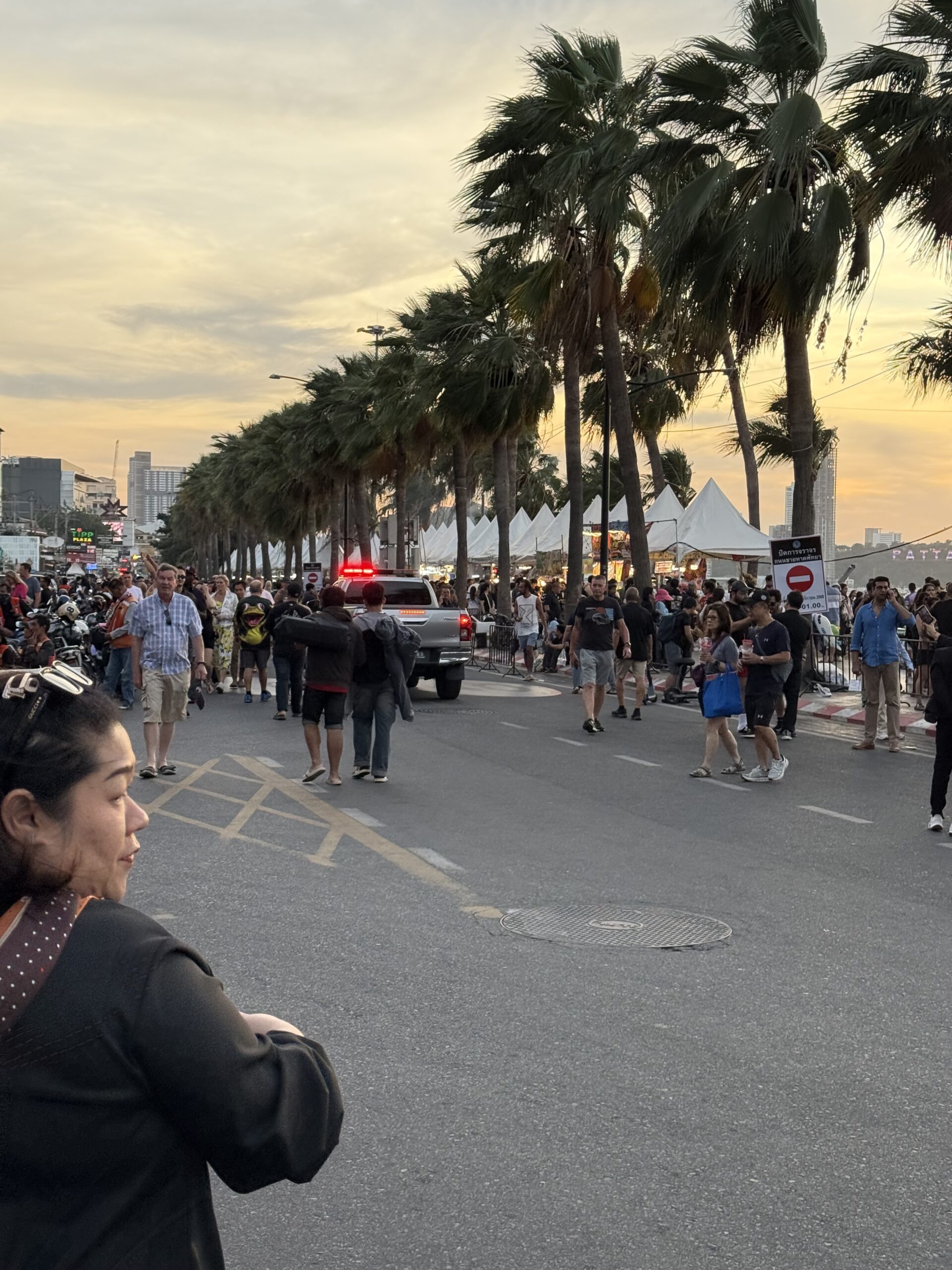
Stand in the center of Prague’s Old Town in July and you’ll see the system working perfectly. Thousands of people, moving in slow, predictable currents between a handful of points: the clock, the bridge, the castle. Step ten minutes outside that circuit—into a park, a quiet neighborhood, a trail—and the crowds vanish. It’s not that tourists don’t like those places. It’s that they were never told to go there.
That’s the first crack in the image of modern tourism: it isn’t exploration—it’s channeling.
The Funnel: Tourism as a Controlled Experience
Tourism today looks spontaneous, but it’s not. It’s pre-engineered.
Before anyone lands in Vienna or Prague, their choices have already been narrowed:
- “Top 10” lists
- Google Maps highlights
- Travel blogs and Instagram
- Tour routes and hotel locations
By the time they arrive, they’re not navigating a city—they’re moving along a predefined track. Infrastructure reinforces it:
- Transit routes connect the same set of landmarks
- Hotels cluster nearby
- Restaurants and shops follow the foot traffic
The result is something closer to a theme park logic than a city experience. A destination becomes a sequence of “nodes,” and the tourist moves between them the way a commuter moves between stations.
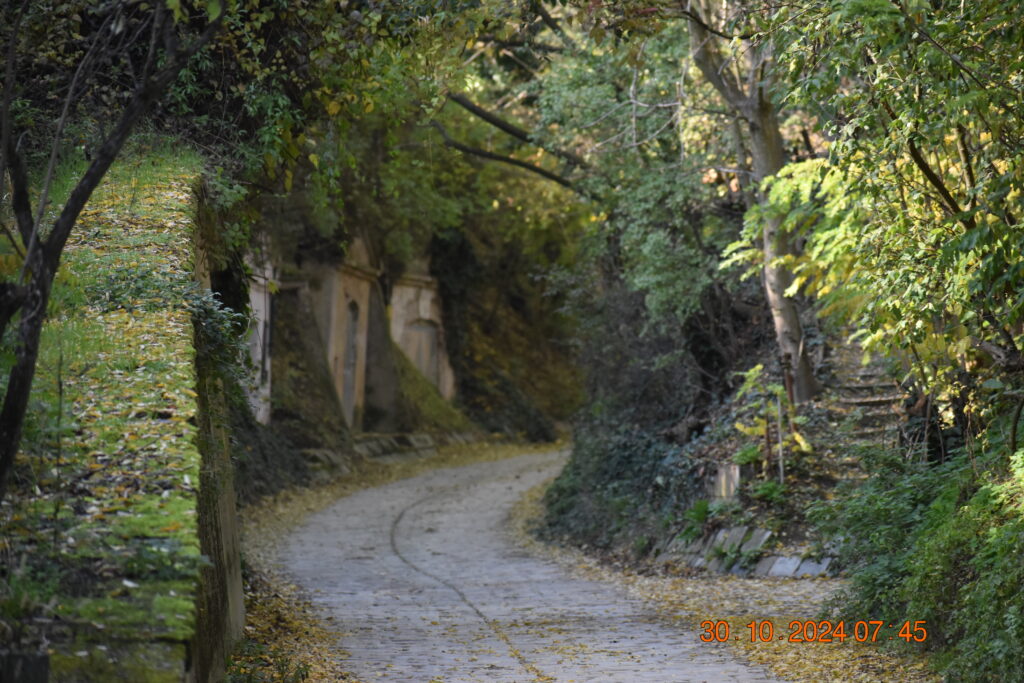
The irony is that this system often leads people away from the best parts of a place. You can walk for hours on Vienna’s Stadtwanderwegs or sit in Prague’s Stromovka Park and see almost no outsiders. These spaces aren’t hidden—they’re just outside the funnel.
Because what tourists are really consuming isn’t the place—it’s the idea of the place.
And the system is designed to deliver that idea efficiently, not authentically.
The Strip: How Coastlines Get Turned into Tourist Corridors
Take that same funnel and stretch it along a beach, and you get the second phenomenon: the ghettoization of coastal tourism.
Look at parts of the Mexican Riviera, southern Thailand, or Bali. What you see isn’t a coastline—it’s a strip:
road → hotels → beach → oceanEverything behind it either becomes irrelevant or is hollowed out. Everything in front of it becomes monetized.
This strip is not accidental. It’s the logical endpoint of how tourism functions:
- The beach is the asset
- Proximity to the beach determines value
- So development compresses into a tight line along the shore
Over time, that line thickens:
- More hotels
- More restaurants
- More infrastructure
And eventually, what was once varied and alive becomes uniform. You could be in Cancun, Phuket, or Nha Trang—it starts to feel interchangeable.
This is where the word we used earlier—ghettoization—actually fits better than people might be comfortable with. Not in a social sense, but in a spatial one:
A narrow zone optimized for one purpose, detached from its surroundings, and increasingly artificial.
Locals often avoid it. Nature gets pushed out of it. And tourists stay inside it, rarely realizing there’s much beyond it.
The Damage: When the System Starts Eating Its Own Foundations
Here’s the problem: the whole system depends on something fragile—coastal ecosystems.
And those ecosystems don’t work well with:
- Concrete
- Constant foot traffic
- Heavy water use
- Waste systems that lag behind growth
Build too close to the shoreline, and you disrupt sand movement. Beaches start eroding…
Remove mangroves and dunes, and you lose natural protection against storms
Add thousands of visitors, and you increase pollution, water demand, and ecological stress.
The result isn’t immediate collapse—it’s gradual degradation.
At first:
- The beach is still beautiful
- The water still looks clear
Then:
- Erosion starts creeping in
- Infrastructure expands to “fix” the effects
- Nature gets replaced by engineering
Seawalls. Sand pumping. Drainage systems. Constant maintenance.
And in some places, when the system becomes too degraded?
Investment shifts. Development moves. The next “pristine” stretch is opened up, and the cycle repeats.
Da Nang: Where the Underlying Physics Breaks Through
Da Nang is where this whole story becomes visible—because the natural system is less forgiving.
At first glance, it looks like another booming coastal city:
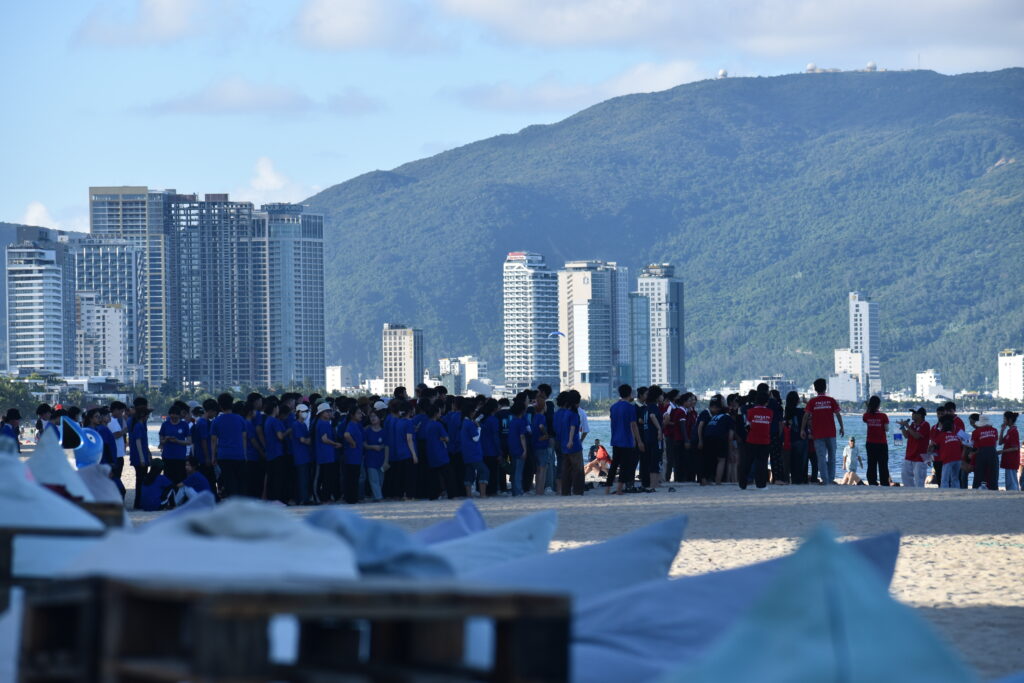
- High-rise hotels along a long beach
- Rapid growth
- Tourism-driven development
But the geography underneath is very different.
A city at the bottom of a funnel
Da Nang sits between mountains and the sea. Not metaphorically—literally.
- Inland: steep mountains rising over 1,400 meters
- Coast: a narrow, low-lying urban strip.
When it rains—and it rains hard during monsoon and typhoon seasons—water doesn’t linger.
It rushes downhill.
Rivers in the region are:
- Short
- Steep
- Prone to rapid surges.
So the city doesn’t just deal with rainfall—it deals with a sudden convergence of water from the entire surrounding terrain.
And then the sea pushes back
Normally, that water would drain out.
But during storms:
- High tides rise
- Storm surge pushes inland
- Rivers lose their ability to discharge
So water that should flow out… stops.
It backs up.
Floods.
Then development makes it worse
The final layer is human:
- Floodplains have been built over.
- Concrete replaces absorbent land
- Natural drainage pathways are altered or blocked
What used to act like a sponge now behaves like a sealed surface.
So when heavy rain hits:
- Water can’t soak in
- It can’t drain out efficiently
- And it accumulates fast
That’s why you saw what you saw: aggressive channels, forced drainage, water being redirected away from buildings.
It’s not a design feature—it’s a compensation mechanism for a system that’s been overbuilt.
The Warning
Da Nang is not unique—it’s just more exposed.
In many coastal tourism zones, the environmental stress is slower, less visible. Beaches shrink gradually. Water quality declines subtly. Infrastructure quietly compensates.
In Da Nang, the same pressures collide with a more intense natural system:
- Steep terrain
- Extreme rainfall
- Constrained drainage
So the problems surface more dramatically:
- Frequent flooding
- Overloaded drainage systems
- Visible tension between development and environment
The Bigger Picture
Put it all together, and a pattern emerges:
- Tourism funnels people into curated experiences
- Development concentrates those experiences into narrow zones
- The environment gets reshaped to support them
- Over time, the system begins to degrade its own foundation
And what looks like leisure—beach vacations, city trips, weekend getaways—is also a quiet form of land transformation at scale.
Not always catastrophic. Not always immediate.
But persistent.
And if you pay attention—whether it’s an empty park in Prague or water being forced around buildings in Da Nang—you can see the system underneath the surface.